Tel/WhatsApp
0086-135 2669 2320


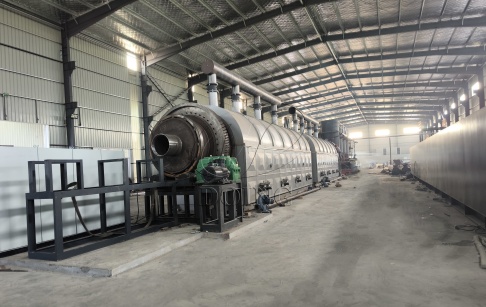
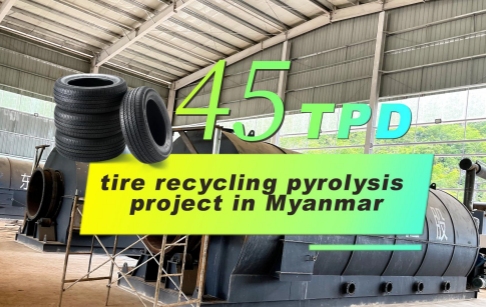
In the resource recovery of waste plastics, PP (polypropylene) and PS (polystyrene) are two of the most common feedstocks for pyrolysis. Many clients ask: Can the same pyrolysis unit process both materials at the same time? Do mixed plastic feedstocks require pretreatment?
The answer is yes. PP and PS can be processed simultaneously in the same pyrolysis unit because their pyrolysis temperature ranges overlap and both are hydrocarbon-based plastics with good compatibility. However, basic pretreatment is still recommended to ensure stable operation, high oil quality, and long equipment life.
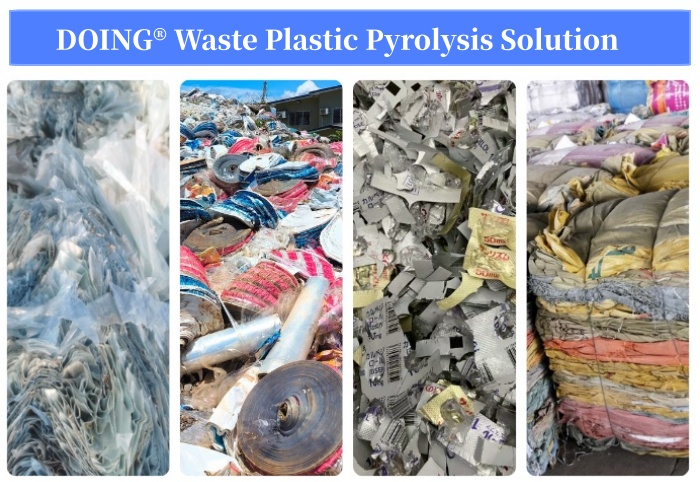 Different types of pyrolytic plastic raw materials
Both PP and PS are suitable feedstocks for pyrolysis. Unlike PVC, they do not generate large amounts of corrosive gases during the process. Unlike PET, they do not contain oxygen that significantly affects pyrolysis oil quality.
| Item | PP | PS |
| Pyrolysis temperature | 400–500°C | 370–450°C |
| Oil yield | 70–85% | 60–75% |
| Main products | Alkanes & alkenes | Aromatics |
| Suitable for co-processing | Yes | Yes |
Since their pyrolysis temperature ranges overlap at approximately 420–480°C, commercial pyrolysis units can process both materials simultaneously. Although the composition of the pyrolysis oil varies with the mixing ratio, the resulting oil remains suitable for further utilization or refining. A higher proportion of PS generally increases the aromatic content of the oil.
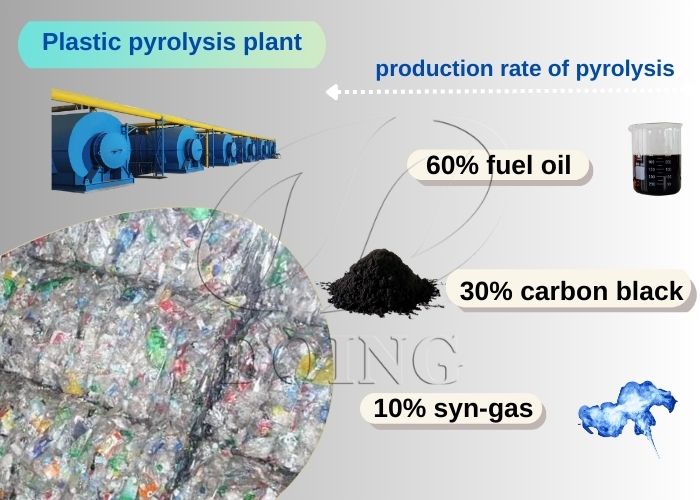 Products of plastic pyrolysis machine
In practice, commercial pyrolysis plants often process mixed PE, PP, and PS plastics together, provided that PVC and PET are removed as much as possible.
Yes. Proper pretreatment helps improve equipment reliability, maintain oil quality, and support stable long-term operation.
The basic pretreatment steps include:
1.Sorting: Remove impurities, especially PVC and PET. PVC produces corrosive gases during pyrolysis that can shorten equipment life, while PET produces relatively little pyrolysis oil and more gas and solid residues, reducing overall oil yield and affecting oil quality.
2.Moisture Control: If the moisture content exceeds 15%, drying is recommended to reduce energy consumption and improve reaction stability. Generally, it is recommended that customers store waste plastic raw materials in a rain-sheltered area and spread them out before processing.
3.Feeding Preparation: Batch pyrolysis plants can be fed directly after pretreatment. Semi-continuous and continuous pyrolysis plants generally require shredding the material to approximately 20–50 mm before sealed screw feeding to ensure stable and continuous operation.
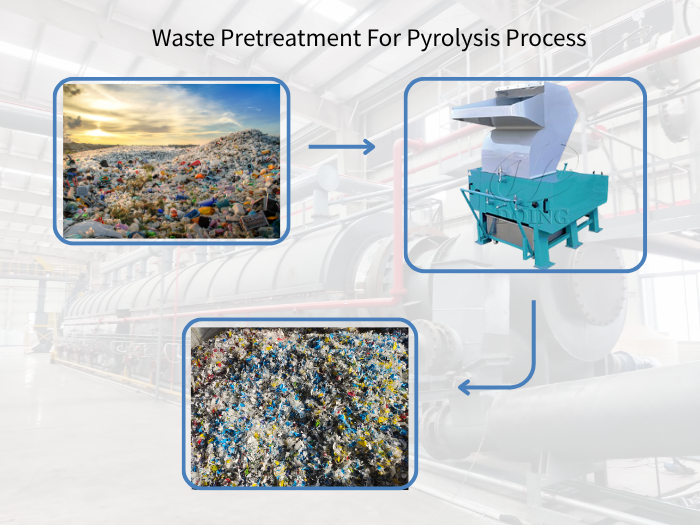 Plastic pretreatment crushing process
Pretreatment does not need to be complicated. Removing PVC and PET, controlling moisture, and preparing a uniform feedstock are usually sufficient for efficient pyrolysis.
When processing mixed PP and PS plastics, issues such as wax formation, wall adhesion, and coking may occur during long-term operation. Henan DOING provides targeted plastic pyrolysis plant solutions to address these challenges.
1.Wax formation: Optional dewaxing tanks or buffer tanks can be installed. For projects in cold regions, pipeline heating systems help prevent wax solidification and blockage.
2.Wall adhesion: Optimized temperature control and heating curves help prevent plastics from softening too early, reducing material buildup on the reactor walls.
3.Optional catalyst and decoking system: Catalysts can improve cracking efficiency and oil quality, while fully continuous pyrolysis plants can be equipped with an decoking system to reduce coke buildup and extend continuous operating time.
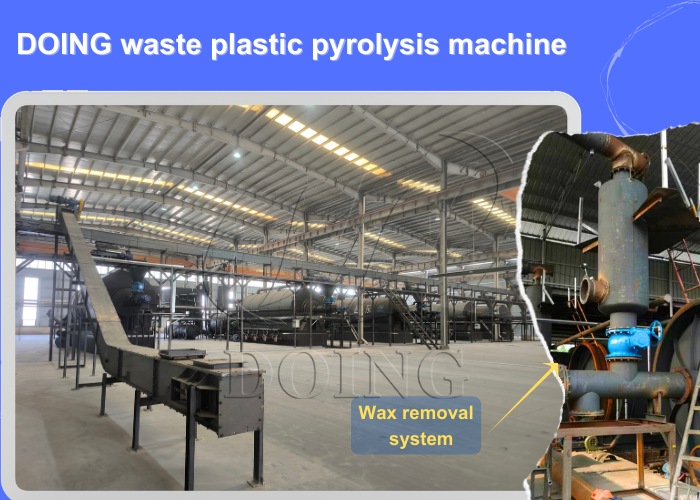 Plastic pyrolysis dewaxing equipment
With flexible temperature control, uniform heating, and optional anti-wax and decoking configurations, Henan DOING pyrolysis plants provide a reliable solution for processing mixed PP and PS plastics.
If you are planning a plastic pyrolysis project, Henan DOING can recommend the most suitable solution based on your feedstock and production requirements.