Tel/WhatsApp
0086-135 2669 2320


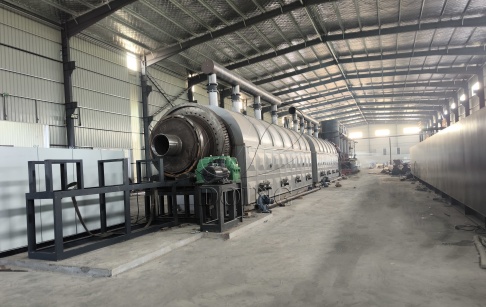
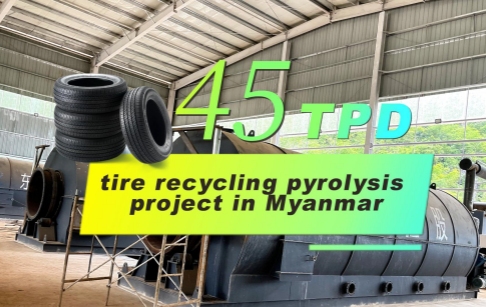
When investing in a large-scale waste tire pyrolysis plant (generally daily tire recycling capacity ≥20 tons), choosing the right waste tire pyrolysis plant manufacturer determines your project’s profitability and long-term viability. This guide outlines seven key factors to evaluate a reliable manufacturer, from pyrolysis machine oil yield and patents to global service.
Look for at least a decade of hands-on pyrolysis experience with proven large-scale track records, not just pilot projects. A seasoned tire pyrolysis plant manufacturer’s value shows in how they handle unexpected challenges — from feedstock variability to local regulatory hurdles.
DOING ECO was founded in 2011 and has served over 20,000 customers across 120+ countries, delivering 120+ pyrolysis projects globally with 106 already operational. Their experience spans diverse feedstocks — waste tires, waste plastics, oil sludge, and hazardous waste — giving them the technical depth to solve complex processing challenges. Prioritize manufacturers who can show you live, operating plants.
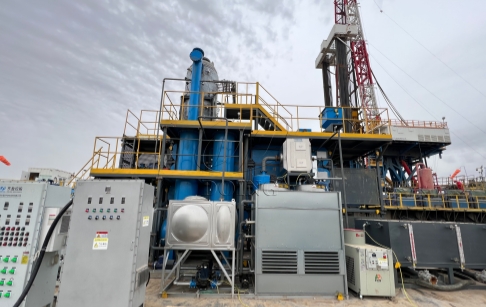
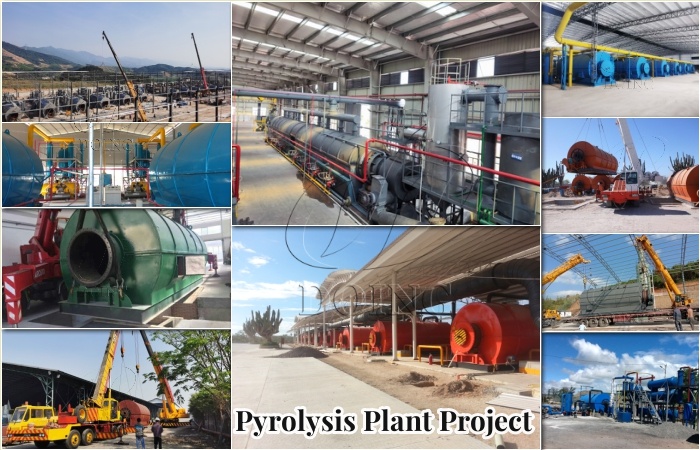 Doing ECO large-scale waste tyre pyrolysis project site
Ask the supplier: Can you name a plant at my scale that has run continuously for more than a year, and can I speak with its operator?
Proprietary technology is the backbone of a competitive tire pyrolysis plant. Evaluate the manufacturer’s patent portfolio, especially for continuous feeding, sealing systems, and coking prevention — the three technical hurdles separating reliable plants from problematic ones.
DOING ECO’s full continuous tire pyrolysis equipment line achieves oil recovery rates of ≥85% with residue oil below 0.3%, operating at 400–600°C with PLC fully automatic control for 30–40 consecutive days of continuous operation. The company holds 50+ patents addressing core failure modes: feed seal degradation, internal coking buildup, and oil gas filtration clogging.
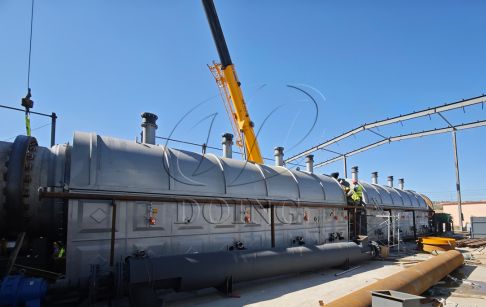
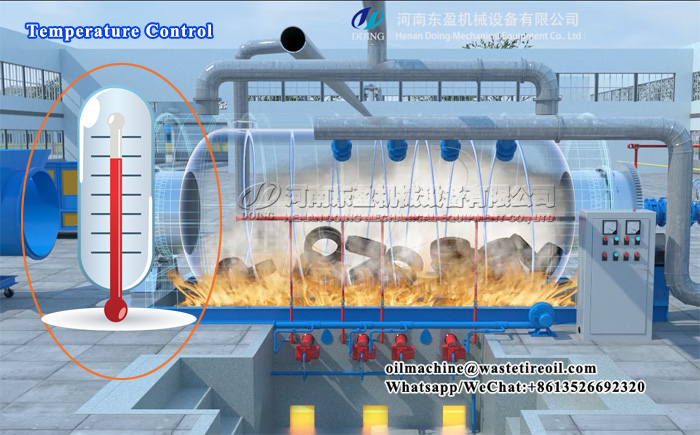 Heating of waste tire pyrolysis equipment
Ask the supplier: Which of your patents directly address coking and sealing, and can you show the field data that proves they work?
If you’re still deciding between batch and continuous pyrolysis, here’s a quick comparison to help narrow things down:
| Feature | Batch Pyrolysis | Full Continuous Pyrolysis |
|---|---|---|
| Feed method | Loaded manually or in batches | Continuous automatic feeding |
| Operating cycle | Stop → discharge → reload → restart | Non-stop 24/7 operation |
| Suitable scale | < 10 t/d | 20–50+ t/d |
| Labor requirement | More operators needed | Minimal staffing |
| Oil quality consistency | Variable between batches | Stable, consistent output |
| Best for | Small pilots, feedstock testing | Commercial-scale production |
For projects above 20 tons/day, a full continuous line is almost always the better choice — lower labor cost, steadier output, and faster payback.
A large-scale tire recycling pyrolysis project requires substantial production capacity and rigorous quality control. Companies that design, manufacture, and assemble in-house typically deliver better quality and shorter lead times than firms outsourcing core components.
DOING ECO operates a 40,000+ sqm factory in Jiaozuo, Henan, with 270 employees, including 200 production staff, 50 technical engineers and 20 quality-control personnel. The facility features CNC plasma cutting, CNC milling, automatic welding, and argon arc welding equipment. ISO 9001, CE, and SGS certified, with design capacity covering skid-mounted units to full continuous lines — enabling parallel manufacturing of multiple projects simultaneously.
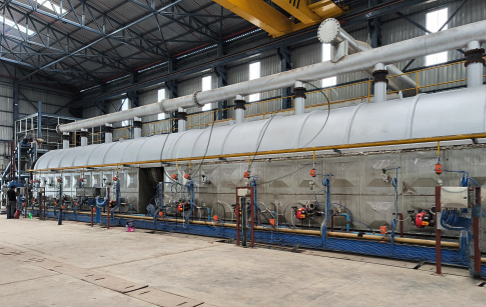
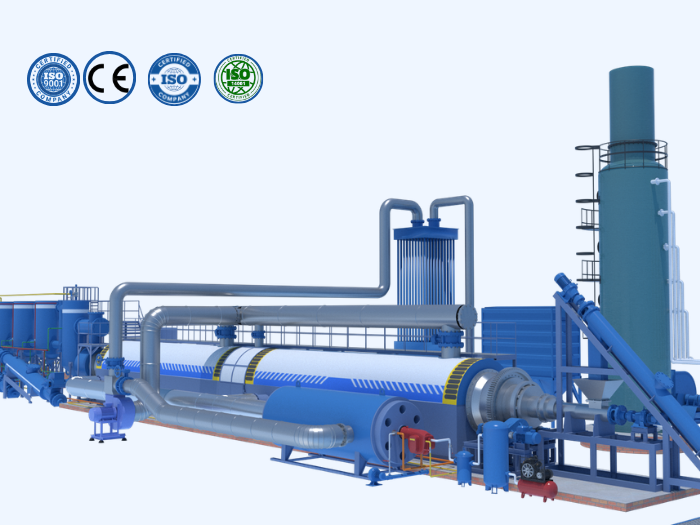 Certified waste pyrolysis equipment by Doing ECO
Ask the supplier: Can I visit the production line and watch my reactor being welded, rather than receiving equipment from a trading company?
Real-world project references matching your scale (20+ tons/day) are the strongest capability indicator. Verify completion dates, operational status, and actual output data.
DOING ECO has delivered multiple large-scale tire pyrolysis plant projects including:
50 t/d full continuous waste tire pyrolysis project in Shanxi of China (2023) — runs 45+ days continuously
Two 50 t/d tire crumb pyrolysis lines in China Liaoning (2023) — successful first ignition
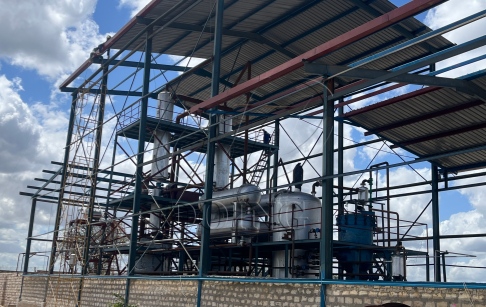
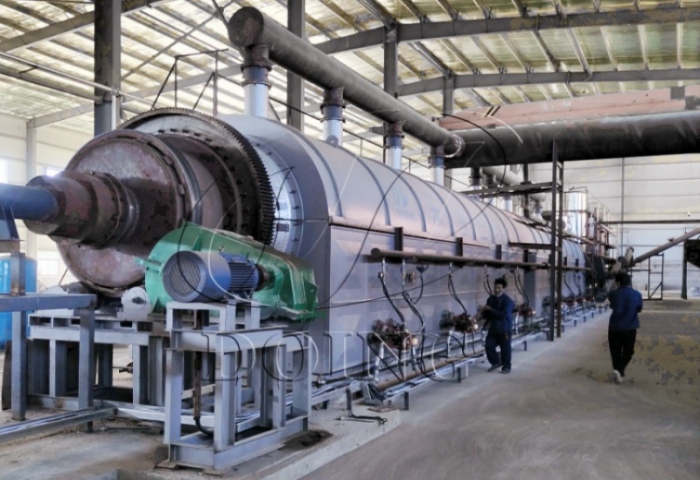 On-site view of a 50-ton fully continuous tire pyrolysis plant
50 t/d full continuous waste tire pyrolysis production line in Mumbai, India (2025) — high-spec zero-pollution chain, delivered to a large Indian recycled-rubber enterprise after factory and site visits
50 t/d full continuous tire pyrolysis oil production project in Tatarstan, Russia (2023) — major oil industry company client, won on technology and service quality without competitive bidding
Ask the supplier: Can you provide the contact of an operator at a 50 t/d pyrolysis plant you commissioned, so I can verify the run-hours claim myself?
Equipment downtime equals revenue loss. A manufacturer with genuine global service presence — not just email support — is essential for minimizing stoppages. Check for physical subsidiaries, warehouses, or partnered service centers in your region.
DOING ECO operates a subsidiary in Nigeria (Henan Doing Machinery Nig. Ltd.) with an overseas warehouse for localized parts supply and on-ground support. We also frequently send overseas engineers to assist clients with installation and equipment commissioning projects. Services include:
1-year warranty with lifetime maintenance
7×24 remote technical support
On-site installation guidance and operator training
Long-term stable wear parts supply
Free material testing before purchase
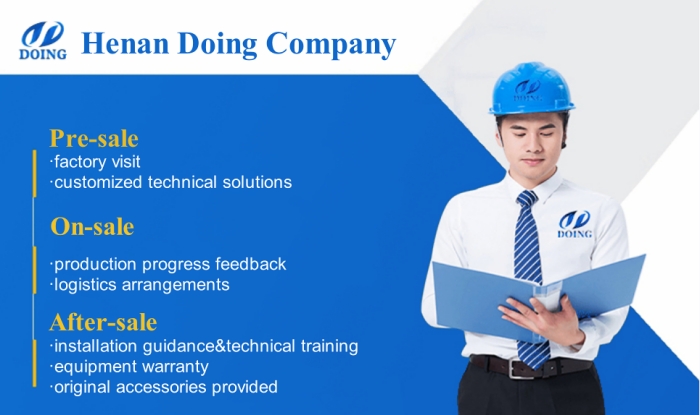 Waste tire pyrolysis plant manufacturer services
Ask the supplier: If my pyrolysis line stops at 2 a.m., who answers, and how fast can a technician or spare part reach my site?
Large-scale pyrolysis projects face increasingly strict environmental regulations. Your manufacturer must demonstrate compliance with international standards and provide documentation for local permitting.
When evaluating a waste tire pyrolysis plant manufacturer for environmental compliance, confirm that emission testing reports and flue gas treatment designs are available for your destination market’s permitting authority.
DOING ECO’s pyrolysis equipment passed SGS testing with dioxin emissions far below EU 2010/75/EU limits. They provide emission testing reports and complete flue gas treatment solutions (desulfurization, denitrification, dust removal). Equipment features triple-seal zero-leakage design and PLC intelligent control with multi-layer safety protection including pressure/temperature alarms and explosion prevention.
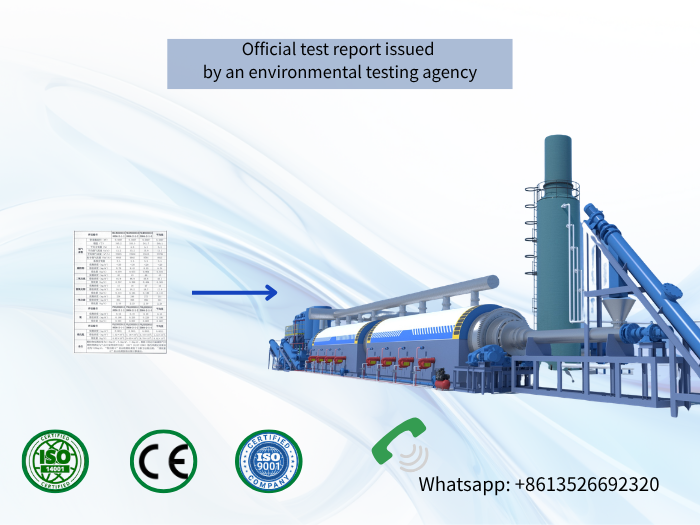 Pyrolysis equipment with reports issued by official testing agencies
Ask the supplier: Can you supply a third-party emission test report that my local authority will accept, not just an internal one?
The cheapest equipment is often the most expensive long-term. Proper TCO analysis should factor in oil yield efficiency, operating costs, maintenance, equipment lifespan, and byproduct revenue — not just upfront price.
Vertically integrated manufacturers control the entire supply chain for better cost control and reliability. With oil recovery rates ≥85% and byproduct revenues from carbon black and steel wire, many projects achieve payback periods of 6–18 months. Free material testing before investment ensures your financial model is based on actual performance data.
Here’s a rough comparison to put TCO in perspective:
| Cost Factor | Low-Cost Equipment | DOING ECO Equipment |
|---|---|---|
| Upfront price | Lower | Moderate premium |
| Oil recovery rate | ~75–80% | ≥85% |
| Annual maintenance | Higher (more breakdowns) | Lower (built to last) |
| Byproduct quality | Variable | Consistent (carbon black & steel wire) |
| Typical payback period | 18–24 months | 6–18 months |
| Downtime risk | Higher | Minimal (global parts network) |
Ask the supplier: Show me a TCO model from a plant like mine, including energy, labor, and maintenance — not just the equipment quote.
DOING ECO guarantees oil recovery and yield rates on full continuous tire pyrolysis lines. That’s why we always recommend free material testing with your actual feedstock before payment, so both sides know exactly what performance to expect.
Look for manufacturers offering customized plant layout based on free on-site surveys and material testing. Their engineering team should adjust feed systems, condensation, and emission treatment to match local conditions rather than one-size-fits-all solutions.
Standard delivery of large scale of pyrolysis machines is 30–60 working days, with expedited options available for urgent projects (typically 20–30 working days depending on configuration). Delivery timelines and KPIs can be contractually bound with delay responsibility clauses. Note that pressure vessel components require mandatory inspection procedures and cannot be rushed indefinitely.
Look for manufacturers supporting third-party factory inspections (SGS/BV) prior to shipment, real-time production progress updates with photos and videos, and factory visits before balance payment. This transparent process ensures you know exactly what you’re paying for.
Key indicators include registered capital, employee count, R&D team size, patent portfolio, and business credit records. A manufacturer operating since 2011 with 270 employees and 50+ patents indicates an established enterprise rather than a fly-by-night operator.
Ready to evaluate the right waste tire pyrolysis plant manufacturer for your large-scale project? DOING ECO offers free material testing, factory visits, and customized project proposals tailored to your feedstock, capacity requirements, and local regulations.
Contact DOING ECO today to schedule a consultation and receive a comprehensive project proposal with verified performance data.